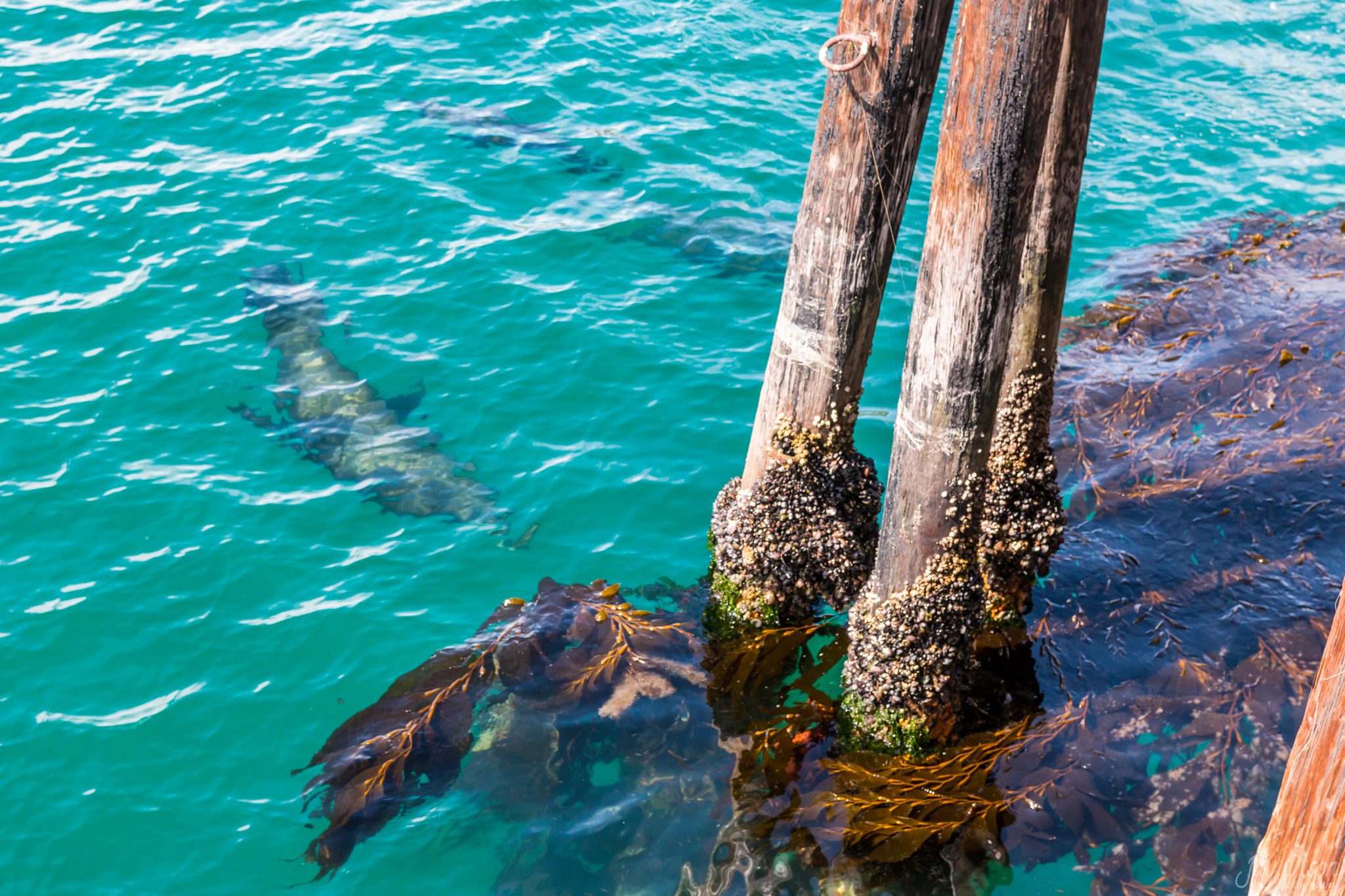
Seals & Sea Lions
Sea lions bark from the docks under Harford Pier, and harbor seals rest on the rocks around the bay. Here's how to tell them apart.
- Sea lions
- Docks and floats at Harford Pier, the Port San Luis breakwater
- Harbor seals
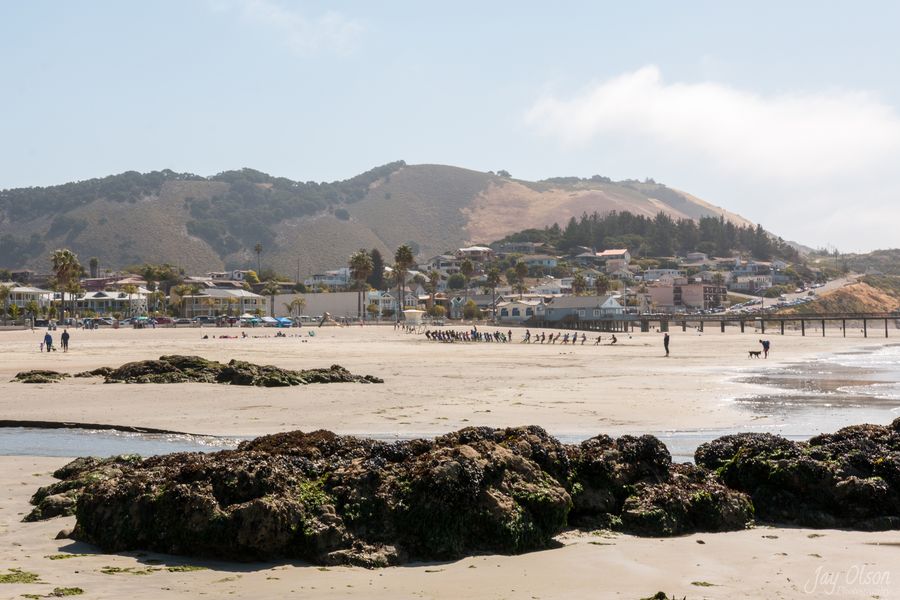
- Rocks and beaches around the bay
- Stay back
- At least 50 yards, people and dogs
- Hurt or stranded animal
- West Coast Stranding Hotline, 1-866-767-6114
Two kinds of pinnipeds live around Avila year-round: California sea lions and Pacific harbor seals. The sea lions are the loud ones barking from the docks under Harford Pier. The harbor seals are easy to miss, resting on rocks with their heads and tails curled up like a banana.
Where to see them
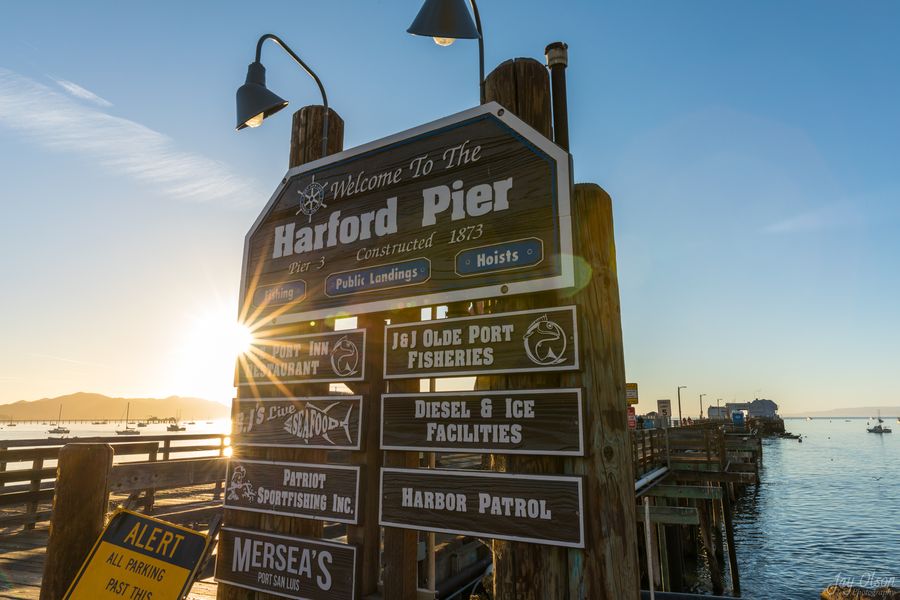
Harford Pier is the best bet. Sea lions rest on the docks and floats below the pier, and you can watch them from the railing while you wait for lunch at the end. See Harford Pier and Port San Luis.
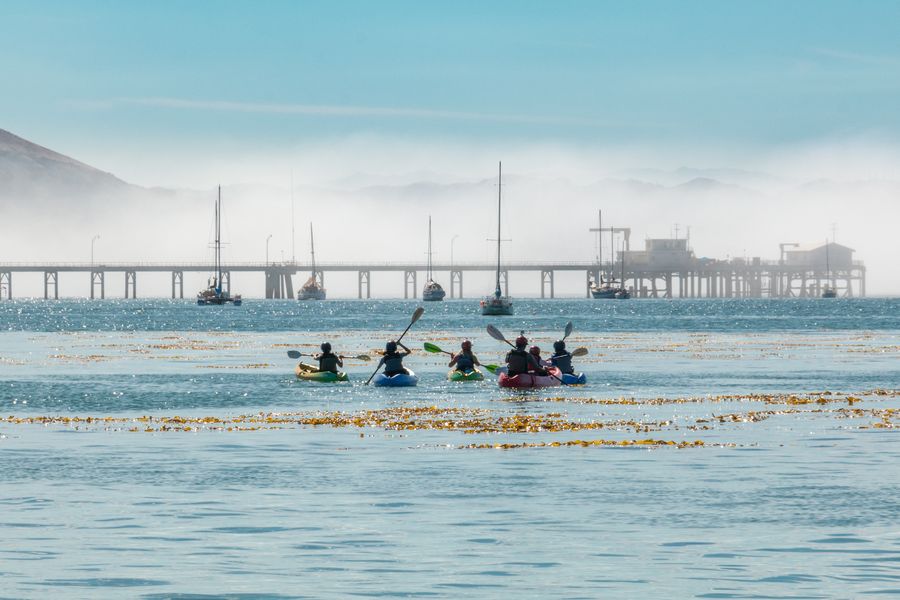
The Port San Luis breakwater is another regular haul-out. Tour boats from the pier often stop there, and paddlers pass close by. See Kayak & Paddleboard.
Out in the bay, sea lions join the feeding frenzies when anchovies come in. In August 2026, whale watching trips from Harford Pier reported a few hundred sea lions feeding alongside lunge-feeding humpbacks. See Whale Watching.
How to tell a seal from a sea lion
| California sea lion | Harbor seal | |
|---|---|---|
| Ears | Small ear flaps you can see | No flaps, just a small ear hole |
| On land | Walks on its flippers | Can't walk; moves like a caterpillar on its belly |
| Size | 6 to 7.5 feet; 240 to 700 pounds | Up to 6 feet and 285 pounds |
| Where it rests | Docks, buoys, jetties and beaches | Rocks, reefs and beaches, often in a banana pose |
Sea lions are playful and very vocal. Male sea lions bark to talk to other males and females. California sea lions breed far to the south, from the Channel Islands to central Mexico, with most pups born from May through June. Adult females and young sea lions are slender and tan to blonde, and adult males are bigger and dark brown to black.
Keeping your distance
Seals and sea lions are protected under the Marine Mammal Protection Act. NOAA asks people and pets to stay at least 50 yards away, about half a football field, whether the animals are on land or in the water. You're too close if an animal starts to stare at you, fidget, call out or move into the water. Don't take selfies with them, don't feed them, and don't fly drones over them.
A pup alone on the beach
It's normal for a mother seal to leave her pup on the beach for up to 24 hours while she feeds. If she sees people near it, she may not come back. Keep well away, keep dogs leashed, and let others know to give it space.
If a seal or sea lion looks sick or injured, or a pup is still alone after a day, call the West Coast Stranding Hotline at 1-866-767-6114. To report someone harassing an animal, call NOAA's enforcement hotline at 1-800-853-1964.
Local tips
- Listen for barking as you walk out Harford Pier, then look down at the floats.
- Sea lions can bite. Watch from the pier, not from the floats or the water's edge.
- Keep dogs leashed and well away. Animals can be disturbed even from a distance if you're upwind of them.
- Never try to pour water on, feed or move a seal or sea lion on the beach.
Frequently asked questions
Where can you see sea lions in Avila Beach?
On the docks and floats around Harford Pier and on the breakwater at Port San Luis. You'll usually hear them before you see them.
What's the difference between a seal and a sea lion?
Sea lions have small ear flaps, bark loudly and can walk on their flippers. Harbor seals have only small ear holes and can't walk on land, so they move by wriggling on their bellies.
I found a baby seal alone on the beach. What should I do?
Leave it alone and keep at least 50 yards back. Mother seals often leave pups on the beach while they feed and come back later. If the pup looks hurt or is still alone after a day, call the West Coast Stranding Hotline at 1-866-767-6114.
How close can you get to sea lions?
NOAA asks people and pets to stay at least 50 yards away, about half a football field, on land and in the water.